When Vivek Singh walked into Swiggy Instamart in January 2022, he had a clear exit strategy. Two months, maybe three, and he’d move on. Vivek stepped into his first professional role within a structured operations team, which was meant to be just a stepping stone. Three years later, he’s a Store Manager leading operations across Mumbai.
So how did a temporary plan turn into a permanent career? This is the story of how curiosity shaped his journey, and how an introvert got out of his comfort zone to lead people and become a Store Manager.

Beyond the Pick List
Vivek started as a POD picker at a time when there was a significant gap in the quick-commerce sector, and Instamart was still establishing its position there. His job description was simple — pick orders accurately, move fast and stay consistent. But Vivek didn’t just stick to a checklist. He paid attention to how the systems ran, why certain processes existed, and how operations could be more efficient.
“I’m an introvert by nature,” Vivek admits. “I don’t interfere in other people’s work. I’d finish mine and leave.”
Yet those questions, and his willingness to grasp the bigger picture, caught his Assistant Store Manager’s attention. “Even though each picker works independently, we can still work together as a team.” That perspective on teamwork changed how Vivek approached his work. He stopped seeing tasks in isolation and began to understand operations as an interconnected whole. The curiosity that led him to ask questions now extended to helping teammates, spotting inefficiencies, and contributing beyond his assigned tasks.
This proactive mindset didn’t go unnoticed. Within five months, Vivek had become someone the team relied on, and his managers recognised him as a capable, operationally-minded team player ready for greater responsibility. He was promoted to Assistant Store Manager.
For Sagar Pramod Rahate, Vivek’s Manager and now a Cluster Operations Manager, the promotion came as no surprise. “From an operational perspective, Vivek demonstrated strong growth potential right from the start,” Sagar recalls. “He consistently showed discipline and reliability, reporting on time and being available during peak hours, while working independently and taking full ownership of tasks.”
When the System Breaks Down
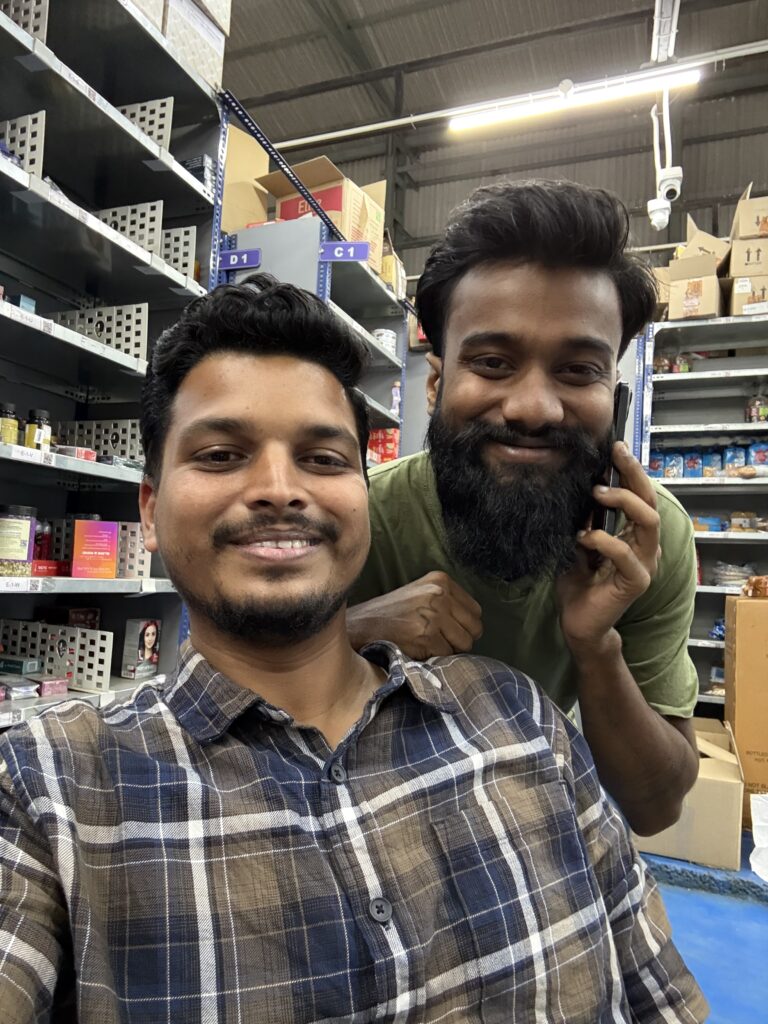
During one particularly demanding weekend, orders flooded in beyond forecast. The loading team was stretched thin. Vehicle turnaround times started creeping up. Dispatch accuracy was under threat. Vivek was scheduled as a loader that day, but he saw a bigger problem taking shape. If the loading sequence wasn’t reorganised immediately, the backlog would spiral, and deliveries would miss their time windows.
He acted immediately and reorganised the entire loading sequence by route priority, ensuring First In First Out (FIFO) rules remained intact, while double-checking every SKU count to prevent incorrect deliveries. When he noticed inventory gaps, he immediately raised them with the picker and supervisor, flagging potential delays before they could cascade into bigger issues. Even after his shift ended, Vivek stayed back to train new team members on proper loading techniques, knowing that a stronger team would prevent such crises in the future.
What followed proved that his approach worked. By the end of the shift, the backlog had cleared, deliveries went out on time, and customer complaints stayed at zero. “This situation demonstrated Vivek’s ability to stay calm under pressure, think operationally beyond his role, and act in the best interest of overall store performance,” Sagar adds.
It wasn’t a one-time effort. Vivek kept spotting gaps and filling them, and City heads noticed. When capable hands were needed to launch dark stores, they called Vivek. He moved from store to store in Mumbai, learning to set up operations and stabilise them.
Then the call came for Goa.
Turning Around the Impossible Store
In 2023, Vivek was sent to fix a struggling store in Goa. He had packed for a week, but ended up staying for 24 days.
The problem was that the store’s Order-to-Billing time was stuck at 22 minutes, even though the target was three minutes! The team was new. Language barriers complicated communication, and processes were either missing or inconsistent, requiring a complete operational rebuild from the ground up.
“When I reached Goa, the situation was genuinely overwhelming,” Vivek recalls. “Everything felt broken at a level I’d never witnessed before. But that didn’t mean we couldn’t tackle the issues. We started addressing them one at a time.”
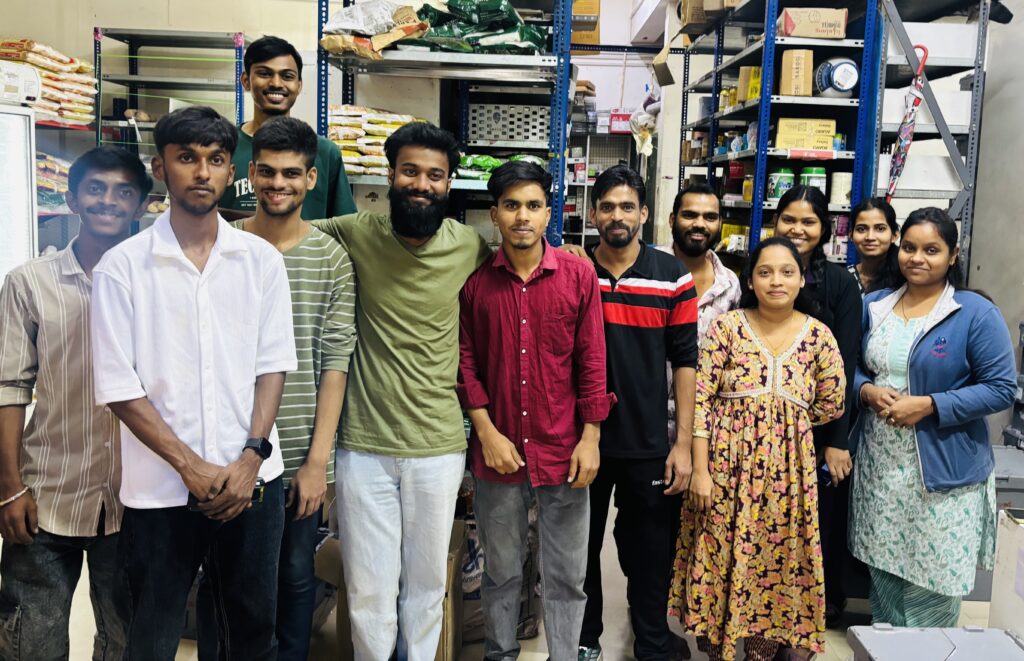
With four loaders reporting to him and a City Manager coordinating logistics, Vivek rewrote workflows, retrained staff, and rebuilt the operational foundation piece by piece. By the time he returned to Mumbai, the Goa dark store was hitting its three-minute target.
The turnaround spoke volumes. His ability to stabilise a struggling operation in an unfamiliar city hadn’t gone unnoticed by leadership. “The work in Goa made the difference,” he says. “When I returned, my managers recognised what we’d accomplished and offered me the Store Manager role.”
Shortly after his return, Vivek was promoted.

Leading with Quiet Confidence
The promotion to Store Manager presented an uncomfortable reality. As an introvert who preferred working quietly, Vivek now faced what leadership actually required: constant communication.
“The transition to Store Manager required an entirely different skill set,” Vivek reflects. “You need to manage teams, communicate constantly, network across functions, and truly understand what people are dealing with. Over time, those skills developed. Today, even addressing a hundred people doesn’t intimidate me.”
His leadership approach stems from his own climb. He remembers what it felt like to be new and uncertain. So when he works with his team now, he doesn’t just hand out instructions. He explains the reasoning and maps out clear paths forward.
“I share my story of how I started and where I have reached, which helps others feel motivated,” Vivek explains. “When people see that the path is real and achievable, their energy changes completely.”
For Sagar, this approach delivers results. “Having worked at the ground level, he has a deep, practical understanding of end-to-end store operations. Vivek’s approach is to identify high-potential associates, assign them stretch responsibilities, and support them with regular feedback.”
Vivek describes how this plays out in daily operations. Each shift begins with a team huddle. Seven pickers gather, share feedback, surface issues, and align on priorities. One New Year’s shift left a lasting impression. Orders poured in beyond every projection, and people were exhausted. Some had finished their shifts, but the energy didn’t drop. Music played. Team members helped each other without being asked.
“In that moment, I realised how much camaraderie, grit and persistence our team has,” Vivek says with genuine pride.
Lessons From the Floor
When asked for career advice, Vivek talks about staying grounded. “Be humble, no matter what level you reach,” he says. “You have to manage resources. You have to understand your people, not just direct them.”
He emphasises being approachable and open to learning. “As a Store Manager, I will help you gain skills, but you need the willingness to put yourself out there,” he explains. His advice for newcomers is straightforward: take initiative early, step out on your own, and don’t overthink the task before attempting it. Within a week or two, showing up and doing good work should feel natural, not forced.
Vivek didn’t arrive with a background in operations. He learned how to draft emails at Swiggy. He learned inventory management and discipline. Most importantly, he learned that strong teams can solve almost any problem. “If you have good manpower, any issue can be tackled,” he says.
Why the Two Months Turned Into Three Years
That short-term exit strategy? Long forgotten. In 2022, Vivek didn’t broadcast that he worked at Swiggy. Most people assumed it meant delivery work, and the judgment that followed was immediate. Today, it’s something he mentions with pride. Not because external perceptions changed entirely, but because what those three years proved to him matters more.
“My reason to stay is the opportunity to explore and experiment,” Vivek says. “Swiggy offers me the option to grow beyond my role. There are no restrictions on how much you can learn.”
When asked which Swiggy value resonates most with him, he promptly mentioned: “Always be curious, always be learning.” It’s a principle that defined his entire journey, from noticing inefficiencies as a POD picker to rebuilding a broken store in Goa to developing the leadership and communication skills he never thought he had.
For Sagar, his manager Vivek’s journey represents what becomes possible with genuine commitment. “Vivek leads with empathy, ownership, and operational clarity. His ground-up journey enables him to empower his team, build future leaders, and drive consistent performance.”
As for Vivek? That accidental career he stumbled into three years ago is still unfolding, and he’s excited to see where it leads next.